Your brakes are the single most important safety system on your car, but most drivers only think about them when something sounds or feels wrong. Knowing a few basics can help you catch a problem early, understand what a shop is telling you, and know the difference between something minor and something that needs attention right away. Here's everything you need to know, explained simply.
What Squealing Brakes Mean
A high-pitched squeal when you brake is one of the most common brake sounds, and it's usually not an accident. Most brake pads have a small metal tab built into them called a wear indicator, and its entire purpose is to make a squealing noise once the pad has worn down to the point where it needs replacing soon.
In other words, that squeal is often the brake pad doing exactly what it was designed to do: warn you before things get worse. It's a signal to get the pads checked soon, not necessarily an emergency, but not something to ignore for months either.
Squealing can also happen occasionally from moisture, like after rain or overnight dew, and that kind usually goes away after a few uses. The difference is that moisture-related squealing is occasional and temporary, while worn-pad squealing is consistent and gets more frequent over time.
What a Rotor Is
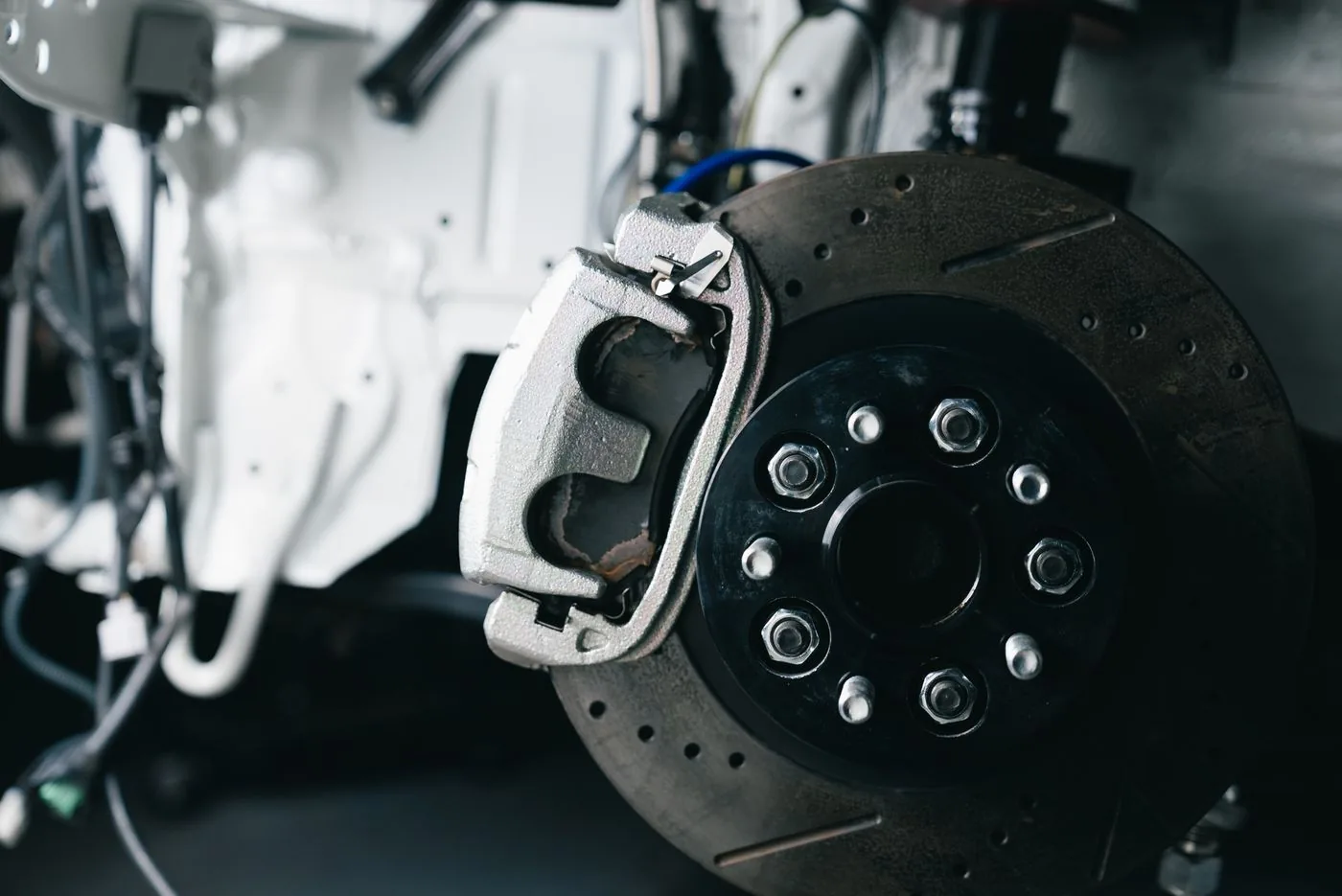
The rotor is the flat, round metal disc that spins along with your wheel. When you press the brake pedal, the brake pads squeeze against the rotor from both sides, and that friction is what actually slows the car down.
Rotors are built to handle a lot of heat and pressure, but they wear down over time too, just more slowly than pads. They can also develop grooves, warping, or uneven wear, especially if the pads are left worn down too long, since metal-on-metal contact can start to damage the rotor's surface.
A simple way to think about it: pads are the part that presses, and the rotor is the part that gets pressed against. When people talk about a "brake job," they usually mean replacing the pads, and sometimes the rotors too if they've been damaged.
How to Check Your Brake Fluid
Brake fluid is what allows the pressure from your foot on the pedal to actually reach the brakes and make them work. Checking it is simple and doesn't require any tools.
Open the hood and look for a small, usually clear or light-colored plastic reservoir, typically located toward the back of the engine bay on the driver's side. It will have "MIN" and "MAX" lines marked on the side. The fluid level should sit between those two lines.
While you're there, take a look at the color. Fresh brake fluid is usually light yellow or clear. If it looks dark brown or black, that's a sign it's old and due to be changed, since brake fluid breaks down and absorbs moisture over time, which can affect how well the brakes work.
If the fluid level is low, that can sometimes mean the pads are simply worn down, since fluid naturally shifts to fill the extra space as pads wear. But it can also mean a leak somewhere in the system, so a low level is always worth having checked rather than just topping off and ignoring it.
How to Tell If Your Brakes Need Replacing
Beyond squealing, there are a few other signs that point to brakes needing attention.
A grinding noise, different from a squeal, usually means the pads are completely worn through and metal is now grinding directly against metal. This is a serious sign and means the brakes need attention immediately, since continuing to drive like this can damage the rotors and increase stopping distance.
Other signs include:
- The brake pedal feeling softeror sinking closer to the floor than usual
- A vibration or pulsing feelingthrough the pedal when braking
- Simply noticing it takes longer to stopthan it used to
- Visually, if you can see the brake pad through the wheeland it looks thinner than a quarter inch, that's usually a sign it's getting close to needing replacement
What It Means If Braking Pulls to One Side
If your car pulls noticeably to the left or right when you brake, that means the braking force isn't even between the two sides, which is different from a simple wear issue.
This can happen for a few reasons: one brake caliper, the part that squeezes the pad against the rotor, may be sticking or not releasing fully on one side. It can also mean uneven pad wear from side to side, a brake fluid issue affecting only one side of the system, or in some cases, a problem unrelated to the brakes themselves, like uneven tire pressure or an alignment issue.
Pulling while braking is not something to keep driving on and hoping it resolves itself. It affects how predictably the car stops, especially in an emergency, and should be checked out soon.
Not sure what you're seeing or hearing?
Call and describe what the car is doing — you'll talk to someone who works on cars, not a call center.
What a Noise Like Air Leaking Might Mean
A hissing sound, especially one you notice when you press the brake pedal, often points to an issue with the brake booster, a part that uses vacuum pressure from the engine to make it easier to press the brake pedal.
If that vacuum seal develops a leak, you may hear a hissing noise, and you might also notice the brake pedal feels unusually hard or stiff to press, since the assistance that normally makes braking easier isn't working correctly anymore.
This isn't something to guess about at home, since it can be related to a few different parts of the system. It's worth having a shop listen to it and pinpoint exactly where the sound is coming from, since a booster issue affects how much effort it takes to stop the car safely.
Different Types of Brake Pads
Not all brake pads are the same, and the type installed can affect noise, dust, and how the brakes feel.
Ceramic pads are the most common choice on newer vehicles. They tend to be quieter, produce less dust, and last longer, though they usually cost more upfront.
Semi-metallic pads contain metal fibers mixed into the material, which makes them durable and good at handling heat, but they tend to be noisier and produce more brake dust on the wheels.
Organic pads, sometimes called non-metallic pads, are made from a softer blend of materials. They're generally quieter and gentler on rotors, but they wear down faster and aren't always ideal for heavier vehicles or frequent hard braking.
There's no single "best" option for every car. The right choice depends on the vehicle, driving habits, and what the owner prioritizes, whether that's quiet operation, longevity, or performance.
That Pulsing Feeling During Hard Braking Is Usually Normal
If you've ever had to brake hard or suddenly, you may have felt a rapid pulsing or buzzing sensation through the brake pedal. This often surprises people, but in most modern cars, it's a normal part of a safety system called ABS, or anti-lock braking system.
ABS is designed to prevent the wheels from locking up completely during hard braking, which helps you keep steering control instead of skidding in a straight line. When it activates, it rapidly pulses the brakes many times per second, which is what creates that buzzing feeling under your foot.
This is the system working correctly, not a sign of a problem. It's worth knowing what it feels like ahead of time, so that if it happens during an emergency stop, it doesn't catch you off guard or make you ease off the brake pedal when you actually need to keep pressing firmly.
What a Spongy Brake Pedal Means
Brake fluid works by transferring pressure through sealed lines, and that only works correctly if there's no air mixed into the fluid. If air gets into the brake lines, often from a fluid leak or after certain repairs, the pedal can start to feel soft, spongy, or like it sinks farther than normal before the brakes engage.
This happens because air compresses, while brake fluid does not. When there's air in the system, some of the pressure from your foot gets absorbed by compressing that air instead of being transferred directly to the brakes.
Fixing this involves a process called bleeding the brakes, where the system is flushed to remove trapped air and replace it with fresh fluid. This isn't a routine maintenance item on its own, but it becomes necessary any time air has entered the system, and it's something worth having done by a shop rather than guessing at home, since it directly affects brake performance.
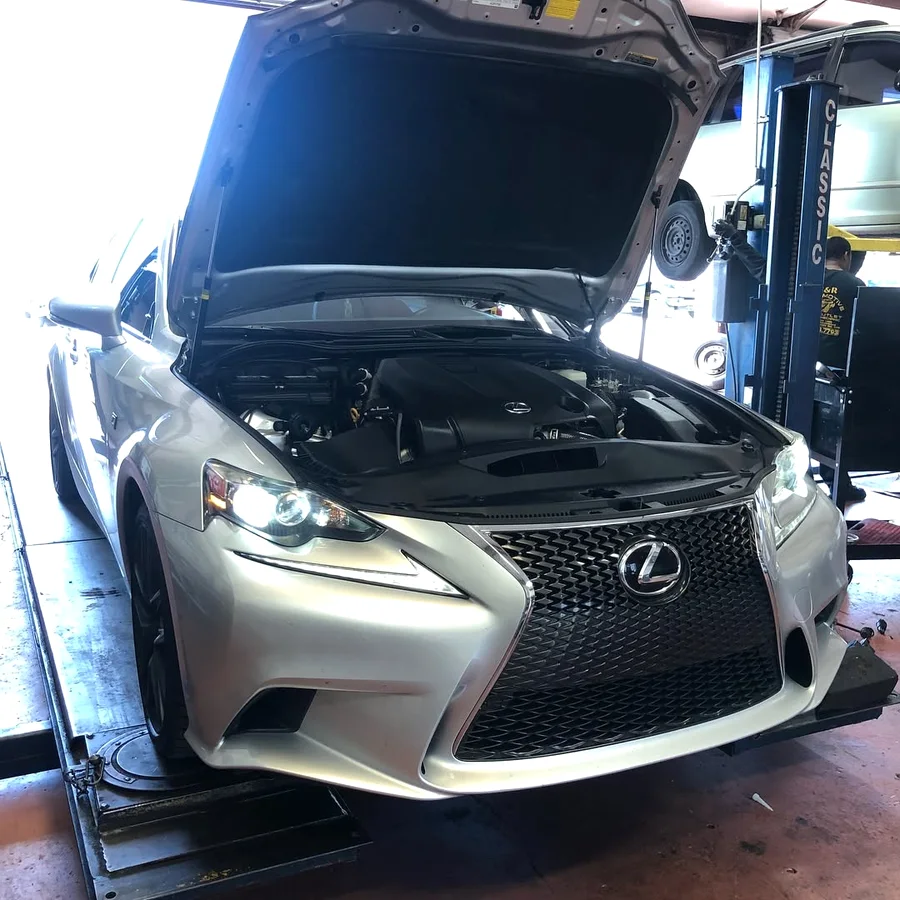
Why Florida's Climate Affects Brakes Too
Florida's heat and humidity create a couple of brake-specific issues that drivers in other climates deal with less often.
Rust on rotors is one of the more common ones. Frequent rain, combined with humidity that never fully lets surfaces dry out, means a light coating of surface rust can form on rotors, especially on a car that sits for a few days without being driven. In most cases, this is a light dusting on the very top layer of the rotor and clears up on its own after a few miles of normal driving, but if it doesn't clear up, or if you notice a grinding feeling that goes away and comes back, it's worth having a shop take a look, since more significant rust can affect braking smoothness.
Heat is the other factor. Stop-and-go traffic in high temperatures can cause something called brake fade, where the brakes temporarily lose some effectiveness after repeated hard use in a short period, since the components get hotter than normal. This is more relevant for long downhill drives or heavy stop-and-go conditions than everyday commuting, but it's part of why keeping pads and rotors in good condition matters even more in a hot climate, since well-maintained components handle heat better than worn ones.
Quick Answers to Common Questions
Is it okay to keep driving if my brakes are squealing?
Usually yes for a short time, but it means the pads should be checked soon rather than waiting months.
How often should brake fluid be changed?
Most manufacturers recommend every two to three years, though it's worth checking the color periodically in between.
Is grinding worse than squealing?
Yes. Squealing is often an early warning; grinding usually means the pads are already worn through.
Can low brake fluid cause my brakes to fail completely?
It can significantly reduce brake performance and should be treated as urgent, especially if the level keeps dropping.
Should I be worried if my brakes only pull to one side occasionally?
Even occasional pulling is worth having checked, since it points to an inconsistency in the braking system.
Do all brake pad types make the same amount of noise?
No. Semi-metallic pads tend to be the noisiest, while ceramic and organic pads usually run quieter.
Is a buzzing feeling in the pedal during hard braking dangerous?
No, it's typically the ABS system working as designed to help you keep control of the car.
Can I drive with a spongy brake pedal?
It's not recommended. A spongy pedal means reduced braking response, and it should be looked at before it worsens.
Does the light surface rust on rotors mean they need replacing?
Usually not. Light rust from humidity typically wears off within a few miles of normal driving.
Does Florida heat wear out brakes faster than other climates?
Not dramatically under normal driving, but heavy stop-and-go traffic in high heat can cause temporary brake fade, which is worth being aware of.
Ready when you are
Stop by, call, or start a repair request online — we'll take a look and tell you straight what it needs.