
Your tires are the only part of your car actually touching the road, but most of us never think about them until something goes wrong. Learning a few basics can help you avoid getting stranded, save money, and know when something needs attention versus when it's fine to ignore. Here's everything you need to know, explained simply.
What Tire Wear Patterns Are Telling You
If you look at your tires and the tread looks worn evenly all the way across, that's a good sign — everything is working the way it should. But if the wear looks uneven, your car is trying to tell you something.
- Worn more in the middlemeans too much air in the tire.
- Worn more on the outer edgesmeans not enough air in the tire.
- Worn more on just one sidemeans your wheels need an alignment.
- Wavy or dip-like wear patchesmean worn shocks or a tire that needs balancing.
An easy way to check your tread at home: stick a penny into the tread groove with Lincoln's head pointing down. If you can see all of his head, it's time for new tires.
How long should tires last?
Tires come with a mileage number, like 50,000 or 60,000 miles, on the sticker when you buy them. Think of this as a general estimate, not a promise.
- Basic everyday tiresare usually rated 40,000 to 50,000 miles.
- A step up, with a smoother rideis usually rated 50,000 to 65,000 miles.
- Higher-end tires built to go the distanceare usually rated 65,000 miles or more.
A few things can make tires wear out faster than that number suggests: driving aggressively with quick stops and fast turns, not keeping up with rotations, or driving on tires that aren't properly filled with air. The number on the sticker is a starting point, not a guarantee.
Keeping Air in Your Tires
Every tire needs a specific amount of air pressure to work correctly. Look for a small sticker inside the driver's door, on the inside edge of the car. That number is what your car actually needs. Ignore the number written on the tire itself, since that is just the maximum the tire can hold, not what you should use.
For the most accurate reading, check your tires in the morning before you've driven anywhere, since driving warms up the air inside and can throw off the number temporarily.
- Too little airmeans the tire wears out faster, gets worse gas mileage, and has a higher risk of a blowout.
- Too much airmeans a bumpier ride and less grip on the road.
- The right amount of airmeans a smooth ride, a longer-lasting tire, and better gas mileage.
Tires naturally lose a little air just from sitting there, and they lose even more when it gets cold outside. If your tire light comes on when the weather changes, that is completely normal. Just get some air added.
What All Those Numbers on the Tire Mean
If you've ever looked at the side of a tire, you've seen a string of letters and numbers like P215/65R16. The P means it's a regular passenger car tire. The 215 is how wide the tire is. The 65 is how tall the sidewall is, shown as a percentage. The R tells you how the tire is built, which is standard on almost every tire. The 16 is the size of the wheel it fits.
You don't need to memorize this. It just matters when you're buying new tires, so you can make sure the new ones actually match your car.
If You See a Bubble on Your Tire
A bubble or bump on the tire is not just cosmetic. It means the inside of the tire got damaged, usually from hitting a pothole or curb pretty hard. The outside rubber is basically all that is left holding the air in.
This cannot be fixed. If you see a bubble, get the tire replaced as soon as possible. It can pop without warning, even if you are driving slowly or the car is parked. It is better to be safe and get it looked at quickly.
What Can Be Fixed vs. What Can't
Usually fixable:
- A small hole about the size of a nail
- Damage in the middle of the tire, away from the edges
Not fixable, needs a full replacement:
- Any damage on the side of the tire
- A bubble or bump anywhere
- A hole too close to the edge of the tire
- Damage from driving on a flat tire
A good shop will patch a fixable hole from the inside of the tire, not just plug it from the outside. That is the safer, longer-lasting fix.
Not sure what you're seeing or hearing?
Call and describe what the car is doing — you'll talk to someone who works on cars, not a call center.
Why Tire Rotation Matters
Rotation means moving your tires to different spots on the car. Shops usually do this every 5,000 to 7,500 miles. Many people do it at the same time as an oil change, so it's easy to remember.
Here's why it matters: the front tires and back tires do not wear the same way. Front tires handle steering. They also take more braking force. Because of this, front tires often wear out faster.
If you never rotate your tires, your front tires may wear out much sooner than your back tires. This means you may need to buy two new tires instead of four lasting the same amount of time.
Rotating your tires regularly helps all four tires wear down at a similar speed, helps your tires last longer overall, and lets a technician check all four tires closely each time, which helps catch problems early.
A simple tip: ask for a tire rotation every time you get an oil change. It is a small habit that saves money later.
Alignment vs. Balancing — What's the Difference?
These two services sound similar, but they fix different problems.
Alignment adjusts the angle of your wheels so they point the correct direction. If your car pulls to one side while driving, or your steering wheel is not straight when driving forward, this usually means you need an alignment.
Balancing adds small weights to the wheel so the weight is spread evenly all the way around. If you feel shaking or vibration, especially at higher speeds, this usually means your tires need to be balanced.
A simple way to remember it: alignment is about direction, balancing is about smoothness. Both problems can also cause uneven tire wear if they are not fixed.
Signs You Need New Tires, Beyond the Tread
The penny test is a good first check, but tread depth is not the only thing that matters. Tires can also become unsafe in other ways, even if the tread still looks okay.
Look for cracks in the sidewall, which are small lines in the rubber on the side of the tire. This is sometimes called dry rot, and it happens more often in hot climates like Florida, where heat and sun break down the rubber faster over time.
Also pay attention to vibration while driving that was not there before, or a tire that keeps losing air even after adding more. Any of these signs mean the tire should be checked by a professional, even if there is still tread left.
How Old Is Too Old? Reading the Tire's Age
Every tire has a date code on the sidewall, usually after the letters "DOT." The last four numbers show the age. The first two numbers are the week, and the last two numbers are the year. For example, 2324 means the tire was made in the 23rd week of 2024.
This matters because rubber breaks down over time, even if a tire is barely driven. Most tire makers recommend replacing tires once they reach 6 to 10 years old, no matter how much tread is left. This is especially important for a spare tire, which may sit unused for years without anyone checking its age.
New Tires vs. Take-Off or Used Tires
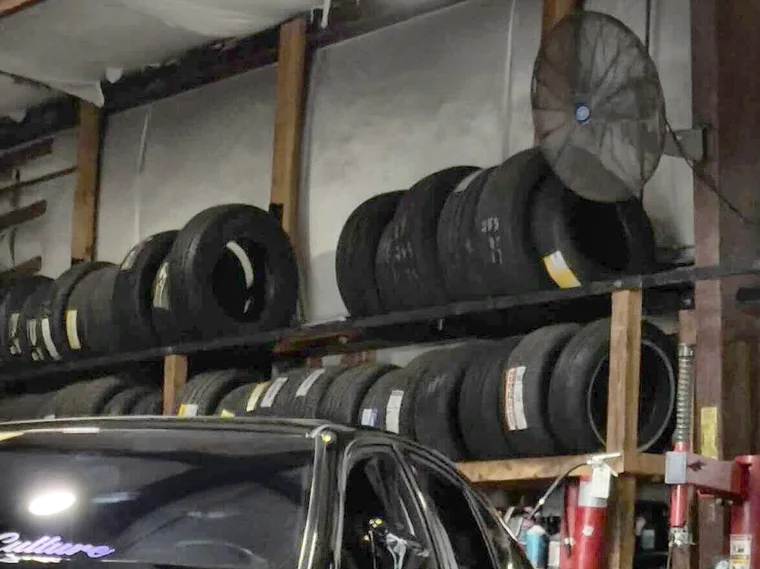
When shopping for tires, customers may be offered new tires, or a cheaper option called take-off tires. Take-off tires are tires that were removed from another vehicle, often because the owner wanted a different style or size, even though the tires still had good tread left.
Take-off tires can be a lower-cost option, but they come with some risk. The buyer often does not know how the tire was cared for, how old it is, or if it has hidden damage from before. New tires cost more, but come with a full warranty and a known history.
For most drivers, new tires are the safer long-term choice, but take-off tires may be a reasonable option for a driver on a tight budget who understands the trade-off.
Why Florida Weather Is Tough on Tires
Living in Florida means dealing with tire conditions that drivers in other states may not think about as often. The heat here is more intense and lasts most of the year, and heat is one of the biggest reasons tires wear out early.
Hot pavement makes the rubber in a tire soften slightly, which can speed up tread wear over time. Heat also causes the air inside a tire to expand, which is why tire pressure can look higher on a hot afternoon than it really needs to be. This is also why sidewall cracking, or dry rot, tends to show up sooner here than in cooler states.
Frequent rain is another factor. Good tread depth matters even more in Florida because of how often roads are wet, since tread is what channels water away from under the tire and helps prevent the car from sliding. This is part of why checking tread depth regularly, not just when a light comes on, is especially important here.
None of this means tires wear out unfairly fast in Florida, but it does mean a little extra attention pays off. Checking air pressure more often, watching for sidewall cracks, and not waiting until tread is dangerously low are all small habits that make a real difference in this climate.
Tire Warranties — What They Cover
Not all tire warranties are the same. It helps to know the difference before buying.
| Warranty Type | What It Covers |
|---|---|
| Treadwear warranty | Covers the tire if it wears out faster than expected during normal driving |
| Road hazard warranty | Covers damage from things like potholes, nails, or road debris |
| Manufacturer defect warranty | Covers problems caused by how the tire was made, not by driving |
A treadwear warranty is connected to the tire's mileage number. For example, if a tire is rated for 60,000 miles but wears out at 35,000 miles under normal use, this warranty may give a discount or a replacement.
Road hazard warranties are different. They cover sudden damage, like hitting a pothole or running over a nail. This type of coverage is especially useful in Florida, where road debris is common.
Good to know: most warranties give a smaller discount the more the tire has already been used. A tire that fails early gets a bigger discount than one that fails later.
Financing and Payment Options
New tires can be expensive, and many people are not ready for the cost. Different ways to pay can help you get tires sooner, which is important for safety.
- In-house payment plans— the shop lets the customer pay over a few months
- Third-party financing— a separate company approves a loan, sometimes with no interest for a limited time
- Buy now, pay later plans— smaller payments, often weekly or every two weeks
- Store credit cards— offered by some tire brands, with their own special payment plans
Quick Answers to Common Questions
How often should I check my tire pressure?
Once a month is plenty, plus before any long road trip.
Do tires just lose air on their own?
Yes, a little bit every month is totally normal, even with no damage.
Should I replace all four tires at once?
Not necessarily, but replacing them in pairs, both front or both back, is usually recommended.
How do I know it's time for new tires?
The penny test mentioned above is the easiest way to check at home.
Ready when you are
Stop by, call, or start a repair request online — we'll take a look and tell you straight what it needs.